29 tornadoes and a derecho confirmed so far in storms that tore through Illinois, northwest Indiana
Published in News & Features
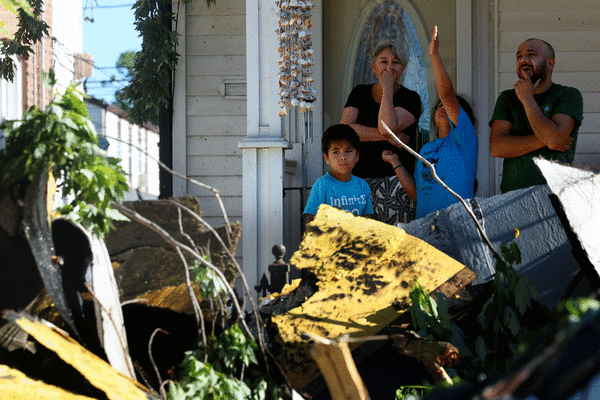
At least 29 tornadoes ripped across Illinois and northwest Indiana last week, according to preliminary reports from the National Weather Service. As residents of parts of these states were recovering and surveying the damage from a destructive derecho that swept through Wednesday night with up to 80 mph winds, they were hit again less than 24 hours later with another round of severe thunderstorms and tornadoes.
A derecho is a widespread and long-lived thunderstorm with damaging winds.
As of the agency’s latest count Sunday, 17 of the confirmed tornadoes from last week occurred in northern Illinois and northwest Indiana, and nine in central Illinois. The Quad Cities weather service office confirmed three tornadoes in western Illinois of unknown intensity that caused no known damage.
The 17 tornadoes in northern Illinois and northwest Indiana brought the area’s tally for 2026 to 44 — already the third most of any year since recordkeeping began in 1950.
“This is well above average, already, for a typical year,” said Rafal Ogorek, a meteorologist with the weather service’s Chicago office.
The top two years with the most tornadoes in the office’s forecast area are 2024, with 63 confirmed tornadoes, and 2023, with 58. The entire state of Illinois typically averages 50 tornadoes annually.
Thursday produced three EF-3 tornadoes — which are characterized by speeds of 136 to 165 mph — that hit Streator, a city 81 miles southwest of Chicago; the village of Washburn near Peoria; and the towns of Hebron and Kouts in Porter County, Indiana.
No major injuries have been reported.
The EF or Enhanced Fujita scale goes from 0-5, with an EF-0 tornado starting at 65 mph and an EF-5 tornado being over 200 mph. Merrillville, in Indiana, was hit by an EF-2 tornado. This is the second time in three months a tornado of that velocity has swept through the area, after an EF-3 struck Lake Village in Newton County in March, killing an elderly couple in their home.
As human activities such as fossil-fuel burning release heat-trapping gases into the atmosphere and climate change intensifies, air in the Midwest is becoming more saturated with humidity, a key ingredient of strong thunderstorms that can produce tornadoes.
Research also indicates tornadoes are happening more often during nontraditional tornado months, lasting longer and beginning sooner as winters become warmer and more humid. Most tornadoes in Illinois occur between April 1 and June 30, but according to the weather service, nearly half of the state’s tornadoes have occurred in the fall or winter in recent years.
Increasingly frequent and intense severe weather, such as tornadoes and derechos, has cost Illinoisans billions of dollars in recent years. In August 2020, a “ferocious” derecho downed trees and rattled windows from Iowa to Chicago, causing $11 billion in damage.
In 2024, nine of 12 weather events that affected Illinois and cost billions were severe storms with tornadoes, high winds and large hail. The National Oceanic and Atmospheric Administration retired its public database tracking billion-dollar weather and climate disasters in May 2025 as part of the Trump administration’s rollbacks in federal spending.
State Farm said in 2025 its Illinois homeowners business has seen “unsustainable” losses in 13 of the last 15 years and cited more frequent extreme weather events such as wind, hail and tornadoes, insufficient premiums to cover claims and the rising cost of repairs due to inflation.
This coming week, the weather service in Chicago has forecast a few severe storms for Tuesday, followed by possible torrential rain and flooding on Wednesday.
“But it’s still too early to say for sure whether that threat will ultimately materialize in the Chicago area, or whether it will end up remaining south of us,” Ogorek said.
So far this meteorological summer — which runs from June 1 to Aug. 31 — the O’Hare International Airport weather station in Chicago has recorded 2.69 inches of rainfall compared to a normal of 1.98 inches. But it’s not a difference he would call significant, the meteorologist said.
“Just because this time of year it can vary, the amount of rainfall that we get can vary considerably from day to day,” Ogorek said. “Summertime storms tend to produce a lot of rain in a short amount of time, so even just having a thunderstorm occurring on one day versus another can make a big difference relative to the average.”
The weather service said intensity ratings are preliminary and assessments are not yet complete, as damage surveys will continue in the coming days in central Cook County, in Indiana’s southern Lake County and in areas south of the Kankakee River.
Cook County and the city of Chicago are reviewing damage — including power outages, downed power lines, felled trees and debris, localized flooding and structural emergencies — and asking residents impacted by these storms to submit an initial damage assessment in an online survey. County and city emergency services will partner with the state’s Emergency Management Agency to gather more information and determine additional options for disaster recovery assistance available to residents.
In Indiana, Lake and Porter County residents are being asked to visit the 211 website at in211.communityos.org or call 866-211-9966 to report storm damage so the Indiana Department of Homeland Security can determine cost estimates in the disaster recovery process.
According to weather service reports, the tornado that hit Thursday near Washburn — a small, rural village in the north-central Illinois counties of Woodford and Marshall — developed east of the Illinois River, damaging trees as it moved northeast. As it gained strength, it ripped off the roofs of several houses.
Reaching peak intensity — with 155 mph winds and a width of 930 yards — northwest of Washburn, the tornado collapsed all the walls of a log house, and destroyed the roof and second floor of a nearby house. Reports also noted it caused extensive crop damage, ripping off corn leaves and uprooting plants, until it dissipated in a farm field northeast of Washburn.
____
©2026 Chicago Tribune. Visit at chicagotribune.com. Distributed by Tribune Content Agency, LLC.






Comments