Cyclosporiasis sickens some people worse – why your diarrhea could be more explosive than others
Published in Health & Fitness
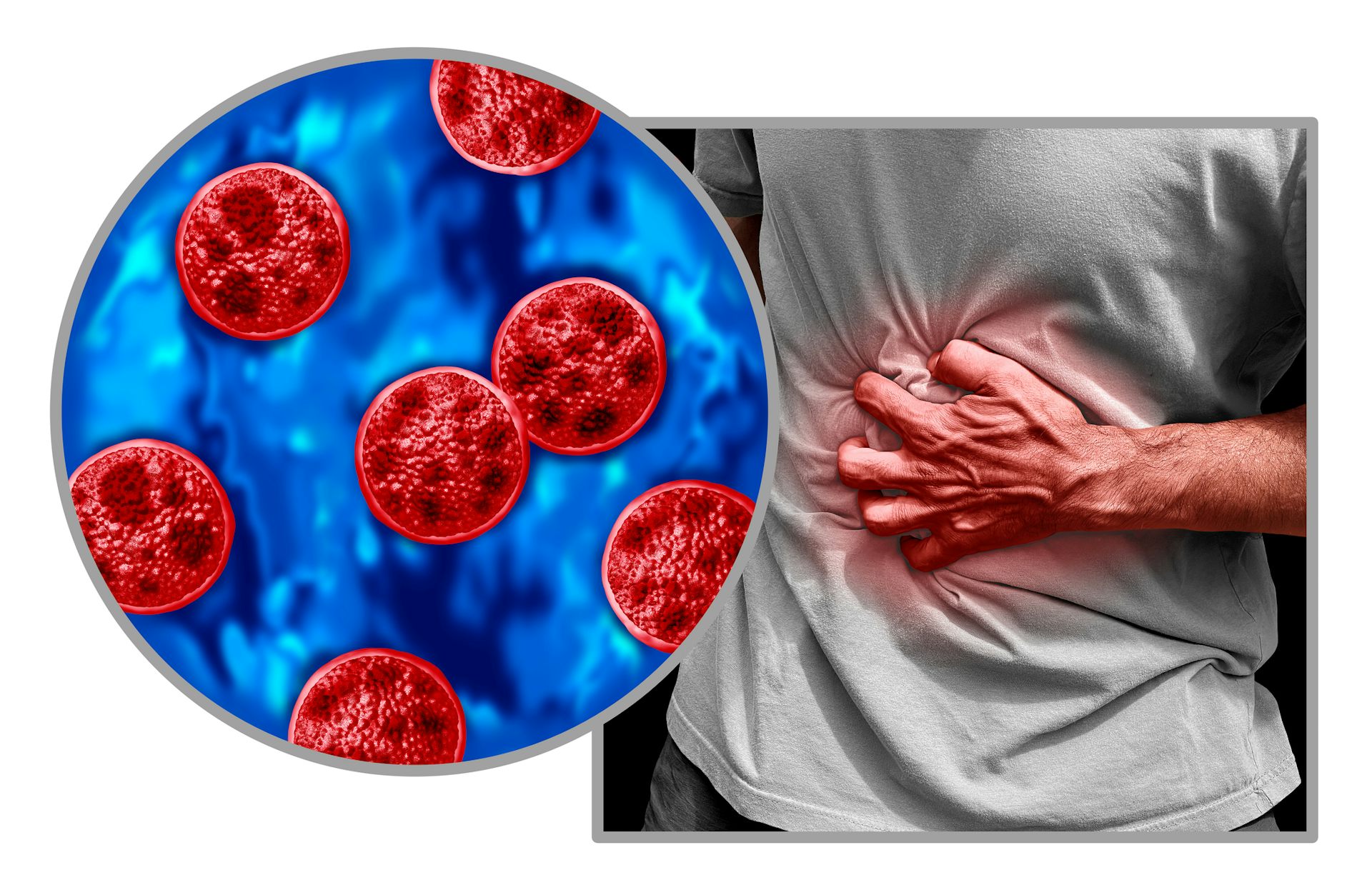
As you may have seen in news headlines or social media memes, there’s explosive diarrhea going around. Understanding how the immune system responds to the parasite that causes the unfortunate disease called cyclosporiasis can help explain why the infection is mild in some people but can cause severe or long-lasting illness in others.
The 2026 outbreak of cyclosporiasis in the U.S. has sickened over 4,100 people as of July. Public health officials have traced a major cluster of illness to contaminated produce imported from Mexico.
As immunologists, we see cyclosporiasis as an interesting example of how the immune system influences disease. Unlike many bacteria that release toxins that damage body tissues, the parasite that causes cyclosporiasis infects the cells lining the small intestine and lives inside them. Symptoms of the infection, including explosive diarrhea, are caused mainly by the body’s immune response to the parasite.
As a result, the severity and duration of infection depend largely on how well the immune system controls it.
Cyclosporiasis is caused by a microscopic parasite named Cyclospora cayetanensis. When a person ingests Cyclospora eggs by consuming contaminated food or water, the tough protective wall of the parasite breaks down in the gut and releases spores that can swim through your digestive tract. These spores swiftly invade the cells lining the small intestine, triggering a specialized branch of the immune system that targets threats inside cells.
In healthy people, the key players in this immune response are helper T cells, which act as the commanders of the immune system. These cells release a powerful chemical alarm called interferon-gamma that instructs infected tissues to stop parasites inside other cells from multiplying. Interferon-gamma acts like an emergency pathway, raising the signal to deprive nutrients from parasites to starve them or use chemicals produced in the cell to kill them.
However, the intestinal lining needs time to heal and resolve inflammation even after the parasite has been eliminated. Depending on how long that takes, you could still experience symptoms of the illness for several weeks.
Because recovering from infection profoundly depends on an effective immune response, cyclosporiasis can be especially severe in young children, older adults and people with weakened immune systems. Diarrhea can also be accompanied by loss of appetite, flatulence, cramps, nausea, fatigue, body aches and fever.
The parasite has a typical incubation period of approximately one week before symptoms begin showing. It takes time for enough Cyclospora parasites to build up and damage the intestinal lining, so symptoms usually do not appear right away.
For patients with weakened immune systems, the body loses these crucial immune commanders and alarm signals. Without them, the body fails to stop the parasites from replicating inside cells, leading to heavy parasite burdens, severe and prolonged illness, frequent relapses and a higher risk of complications.
In areas where Cyclospora is common, children under 5 are hit hardest due to their undeveloped immune systems and lack of prior exposure to the parasite. Crucially, the immune systems of children who are able to survive these repeated early infections gradually grow to be able to target threats inside cells. Over time, repeated exposure to the parasite can reduce disease severity, explaining why older children and adults in these same communities typically experience milder illness or remain asymptomatic.
It’s important to note that deliberately exposing children to the parasite is dangerous rather than protective, and is not comparable to a controlled vaccine made with an inactivated form of the parasite. Although deaths from cyclosporiasis are uncommon, prolonged diarrhea can cause significant dehydration and malnutrition. In rare cases, severe dehydration may become life-threatening, especially in infants.
Older adults are also at higher risk of severe infection because the immune system weakens with age, a process known as immunosenescence. As people get older, the thymus – an organ where many infection-fighting immune cells are produced – gradually shrinks and becomes less active, leading to fewer new T cells. In addition, existing T cells become less effective over time and are less able to produce interferon-gamma and destroy infected cells. As a result, older adults may have more difficulty clearing Cyclospora infections and are more likely to experience severe or prolonged illness.
Ultimately, cyclosporiasis shows how important a healthy immune system is for fighting infection.
There is currently no vaccine to prevent cyclosporiasis. Diagnosis is made by testing stool samples, which can also identify other causes of infectious diarrhea. The recommended treatment is an antibiotic usually taken for 7-10 days.
Most healthy adults can eventually control and clear the parasite. But people with weakened or developing immune systems are more likely to develop severe or long-lasting illness.
For these vulnerable groups, early diagnosis and prompt treatment are essential to help the body eliminate the parasite and prevent complications.
This article is republished from The Conversation, a nonprofit, independent news organization bringing you facts and trustworthy analysis to help you make sense of our complex world. It was written by: Azadeh Nasuhidehnavi, Binghamton University, State University of New York and Wesley Kufel, Binghamton University, State University of New York
Read more:
Long COVID‑19 and other chronic respiratory conditions after viral infections may stem from an overactive immune response in the lungs
Asymptomatic COVID‑19 is linked to a gene variant that boosts immune memory after exposure to prior seasonal cold viruses
Does regular exercise stop you getting sick in winter?
Wesley Kufel provides consulting services for the New York State Department of Health Bureau of Healthcare Associated Infections.
Azadeh Nasuhidehnavi does not work for, consult, own shares in or receive funding from any company or organization that would benefit from this article, and has disclosed no relevant affiliations beyond their academic appointment.










Comments