
My Pet World: Helping fearful and reactive pets find their comfort zone



Dear Cathy,
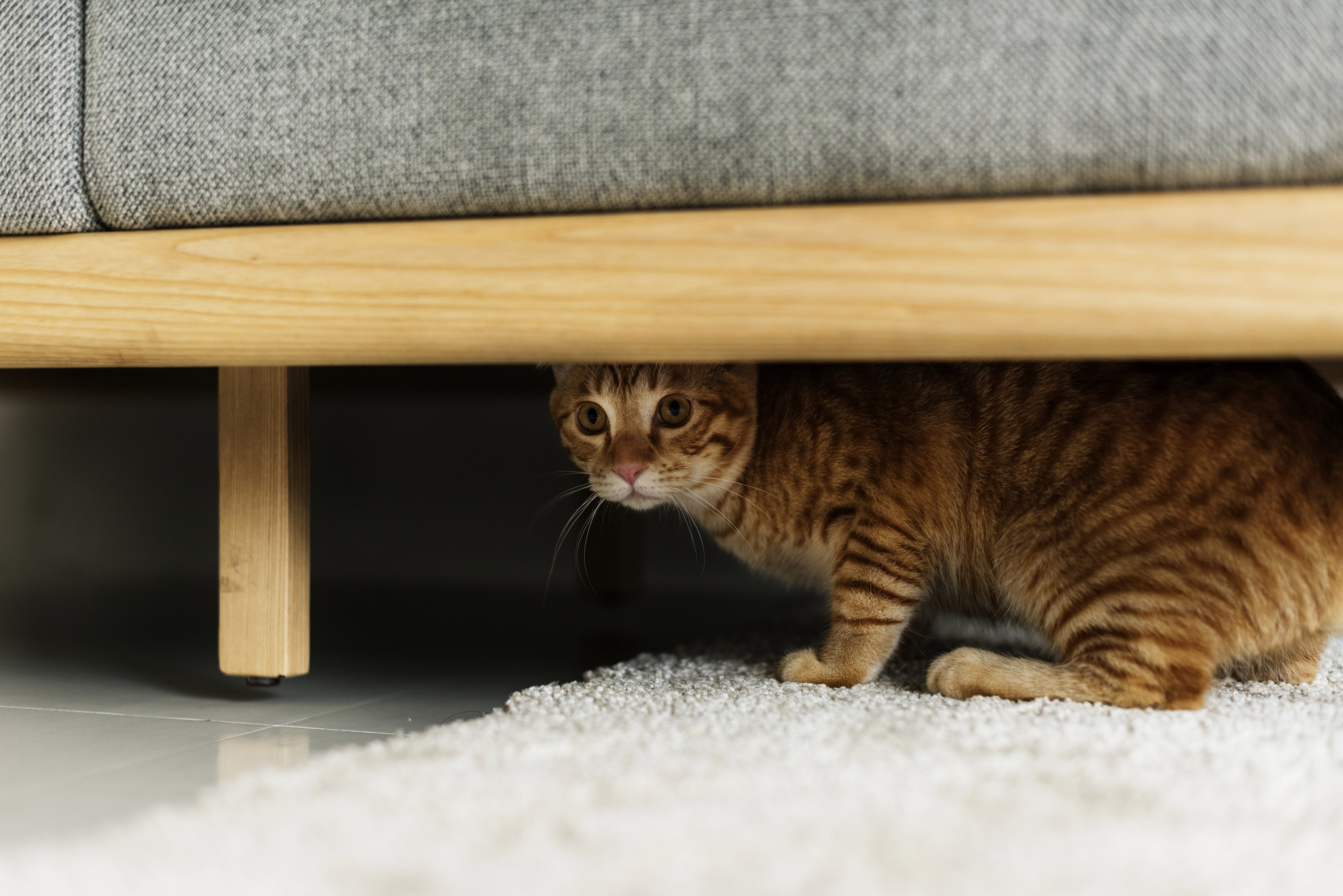
My son adopted a rescue cat about four months ago. He’s an eight-year-old male who has suffered some unknown trauma. They kept him in his own room at the rescue where my son was volunteering and they bonded.
When my son brought him home, though, he crawled under a dresser and has lived there ever since other than to come out and use the litter box. The most he will do is come out halfway so he can be petted, which he loves. I have had cats before and always found them to be curious, demanding and sometimes troublemakers. I don’t know how to help this cat. What do you suggest?
— Marcie, Crystal Lake, Illinois
Dear Marcie,
The fact that he now comes halfway out from under the dresser to be petted is a good sign. He wants affection; he just doesn’t feel safe enough yet to venture very far from his refuge. Cats that have experienced trauma need time to adjust to a new environment. If he is eating, drinking and using the litter box normally, hiding under the dresser isn’t necessarily a problem right now. But there are things you can do.
First, have your son play with the cat. Use a fishing-pole or wand-type toy that he can dangle near the dresses, so he doesn’t have to come all the way out. He may simply watch it at first. When he begins batting at it, or coming farther out to play, that’s a good sign he is starting to relax.
Your son can also offer enticing treats near the dresser, gradually moving them farther away, and spend quiet time in the room without always trying to interact with the cat. Placing an unwashed T-shirt near his hiding spot may also help since cats rely heavily on scent and may find your son’s familiar scent reassuring.
I would also plug in a feline pheromone diffuser, which may help reduce anxiety, and provide alternative safe spaces, such as a covered cat bed, open carrier, cardboard box, or elevated perch. The vertical options are especially helpful because they allow him to watch the room without feeling exposed. The goal is for him to begin choosing other safe places on his own.
Given time, no pressure and plenty of positive experiences, his confidence should grow.
Dear Cathy,
I feel Margie’s pain with her reactive terrier. Our previous dog was a 97-pound leash reactive dog, and we learned a lot from one of his trainers, who was also a certified behaviorist. One of the things we learned was to keep him quiet after each reactive episode. This meant no walks and no exposure to any possible triggers for a couple of days in order to allow his cortisol levels to subside. If I recall correctly, his trainer referred to this as stacking – elevated cortisol levels meant lower tolerance to triggers.
We obviously could not do doggy day care due to his reactivity and instead hired a professional dog walker for backyard visits only. Consistent contact with other dogs might not be ideal for Margie’s pup either.
— Leslie, East Meadow, New York
Dear Leslie,
What you're describing is commonly called trigger stacking. Think of it as stress accumulating faster than a dog has an opportunity to recover. A dog may cope reasonably well with one stressful event, but if another trigger follows – and then another – the dog's ability to cope can diminish. Something the dog might normally tolerate can then provoke a much stronger reaction.
Recovery varies considerably from dog to dog and depends on the intensity and number of stressful experiences. Rather than following a set timetable, the goal should be to reduce additional triggers and give the dog an opportunity to decompress. Two days isn't an established biological rule that applies to every dog, so how much downtime a dog needs should be based on the individual dog and how quickly he returns to his normal behavior.
As for doggie daycare, it can be enjoyable for some dogs, but for a reactive or easily overstimulated dog, hours of interaction with other dogs may add to rather than relieve stress. A quieter alternative, such as an individual dog walker or another form of one-on-one enrichment, may be a better fit.
If someone has a reactive dog, they should rule out health problems and then work with a behaviorist to reduce the dog’s response to triggers. If someone has a reactive dog, they should first rule out health problems and then work with a behaviorist to reduce the dog’s response to triggers. Then, reduce stress and give the dog time to decompress between challenges.
_____
_____
========
(Cathy M. Rosenthal is a longtime animal advocate, author, columnist and pet expert who has more than 25 years in the animal welfare field. Send your pet questions, stories and tips to cathy@petpundit.com. Please include your name, city, and state. You can follow her @cathymrosenthal.)
©2026 Tribune Content Agency, LLC.
(c) 2026 DISTRIBUTED BY TRIBUNE MEDIA SERVICES, INC.







Comments