Chicago woman shows it's never too late to reach a goal, especially when it comes to education
Published in Lifestyles
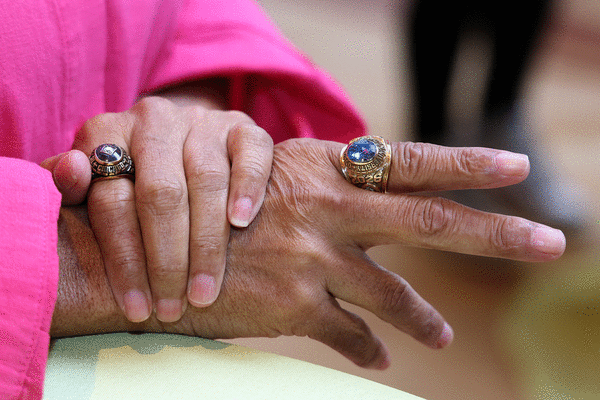
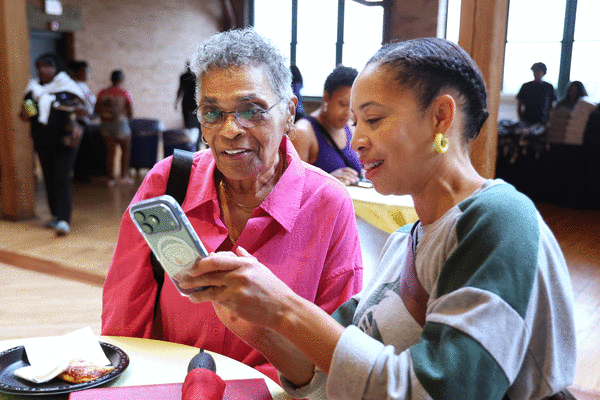

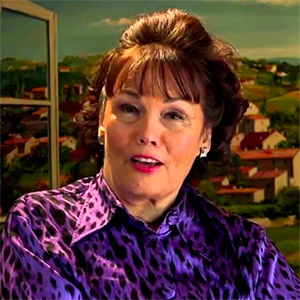
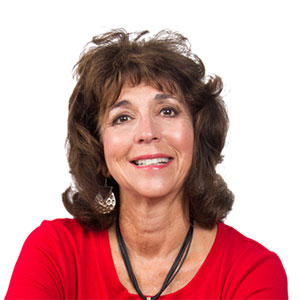
CHICAGO -- Englewood neighborhood native Deniece Rogers didn’t celebrate her 2011 bachelor’s degree, or her 2015 master’s degree. But when she crossed the finish line with her doctorate, she threw a party for herself because “that one, she felt.”
At 75, the Near North Side resident earned her Doctorate of Philosophy in Educational Leadership from DePaul University’s College of Education in June, despite the many starts and stops she endured because of health concerns.
“It was the big mama,” she said, laughing about her last credential. “That one I felt because I had gone through so much to get there. I’m really glad that I didn’t drop out.”
Rogers never began high school. Yet more than a half century later, with grit and persistence, she has emerged as an academic unicorn — so unique and nearly unheard of that there is no official count of others like her — a senior citizen who completed her doctorate at 75 years old.
While just 2.5% of students enrolled in postsecondary institutions in 2023 were between the ages of 50-64, per the most recent data available from the National Center for Education Statistics, it’s unclear how many of those were working toward a Ph.D. What’s more, the agency doesn’t provide a count of college and graduate students in Rogers’ realm, 65 and older. At DePaul, Rogers was even more of an anomaly. In fall 2025, just 1.5% of students enrolled in DePaul’s undergraduate and graduate programs were over 50.
Donning a gold necklace with the trademarked symbol of the late musician Prince, Rogers said she wasn’t thinking about college in her youth, adding that she earned her GED in 1976. Rogers got a civil service job, earning $40,000 a year, enjoying her life, while her two brothers and sister went on to schools such as Princeton University and Grambling State University. Their children also pursued higher education.
By the time her partying died down, Rogers said everybody on her mother’s side of the family had a master’s degree. “I was the only one in my family who didn’t have a bachelor’s degree,” Rogers said. “I was determined that I was going to get an education. I had to do it because I have great nieces and nephews, and I can’t tell them, ‘You are going to go to college, and then they say, ‘Auntie, you started, then you quit.’” Now, she’s the sibling with three degrees telling the next generation, “You can get an education at any age.”
Rogers’ educational journey began in 2000 during her early retirement in her 50s. Focused on “aging gracefully” in body and mind, she started at South Suburban Community College in 2007 and transitioned the next year to DePaul University’s School for New Learning (now the School of Continuing and Professional Studies), which caters to adult learners ages 24 and older who want to work on a bachelor’s or master’s degree on flexible schedules. Rogers earned her bachelor’s in social justice administration in 2012.
By 2015, Rogers earned her master’s in adult education after crossing paths with DePaul professor Ruth Gannon Cook, who as a teacher, adviser and sounding board helped her organize her academic pursuits, including continuing her studies to earn a doctorate. But in 2019, Rogers lost her momentum after enduring myriad issues from stomach infections, back surgery and mini-strokes. Stepping back from school to recover, she walked across the stage in June 10 years after embarking on her journey to earn her doctorate.
Cook, now retired and living in Denver, said she saw a lot of herself in Rogers. Cook was with DePaul for 17 years; she too came to her postgraduate career later in life after she developed health problems after a skiing accident.
“I (too) had dealt with a good many health issues after my accident, and saw some of the things that she was going through and wanted to encourage her that you can’t submit to the pain … it’s important to hold onto whatever you think is supposed to be your purpose,” Cook said.
“Professor Cook was one of my Earth angels,” Rogers said. “Once you know that God has a plan for your life … Just follow the ‘yellow brick road’ of faith. That’s what I did.”
Cook’s guidance, along with Rogers’ faith, helped her as she worked toward her final advanced degree. When discussing not giving up on her educational pursuits, she frequently refers to Jeremiah 29:11: “‘For I know the plans I have for you,’ declares the Lord, ‘plans to prosper you and not to harm you, plans to give you hope and a future.'”
When Rogers rallied and returned to her studies, she pivoted from an Ed.D. to a Ph.D., with Cook and Edwin Gentry, an independent researcher of racial microaggressions in education materials, at her side advising. Gentry earned his doctoral degree in curriculum studies from DePaul in 2024. Both served on Rogers’ dissertation committee. Her topic concerned how “The Underrepresentation of Black American Contributions to American Society in K-12 Curricula Affects Black Students’ Self-Perception and Identity.”
“I attended Lewis-Champlin Elementary … we didn’t learn anything about African American history. I was hearing about George Washington and the Gettysburg Address; none of these people looked like me, she said. “It didn’t hold my interest. I chose that to write about because that’s what I experienced.”
Her work is peer-approved: Gentry has referenced some sections of her dissertation research in his ongoing research, “to create more of a foundation to understanding how racial microaggressions can play out in curriculum,” he said.
Although Rogers was sometimes discouraged, Cook said she believed she would not only accomplish her goal, but also make a significant contribution to her community, society, and the world through her persistence and doggedness. Gentry agreed.
“She was not going to allow her circumstances to cause her to give up,” Gentry said. “Whenever she called me, no matter what time, saying that she was working on this section of her dissertation or there was a problem, I was up helping her navigate that.”
People expect older people to be less ambitious, but Rogers is a rebel, Cook said, adding that she could relate to the flak Rogers got about her age because she earned her doctorate at almost 45. “People told me you’re never going to do anything with a doctorate as old as you are — I ended up a full professor at DePaul,” Cook said, adding that the adage “it takes a village” applies to adults too.
Although not 100% recovered, Rogers said her health is at 85%, and she takes strength training classes and physical therapy to get stronger. She rested over the summer and is looking forward to sharing her journey with other seniors to show that lifelong learning is possible.
If her youth gave her street smarts, her senior years gave her a formal education. “I’m the bomb senior citizen now,” she said, adding that this is the best part of her life. “You gotta be an example.”
©2026 Chicago Tribune. Visit at chicagotribune.com. Distributed by Tribune Content Agency, LLC.









Comments