Dealing with an indoor/outdoor cat
Published in Cats & Dogs News
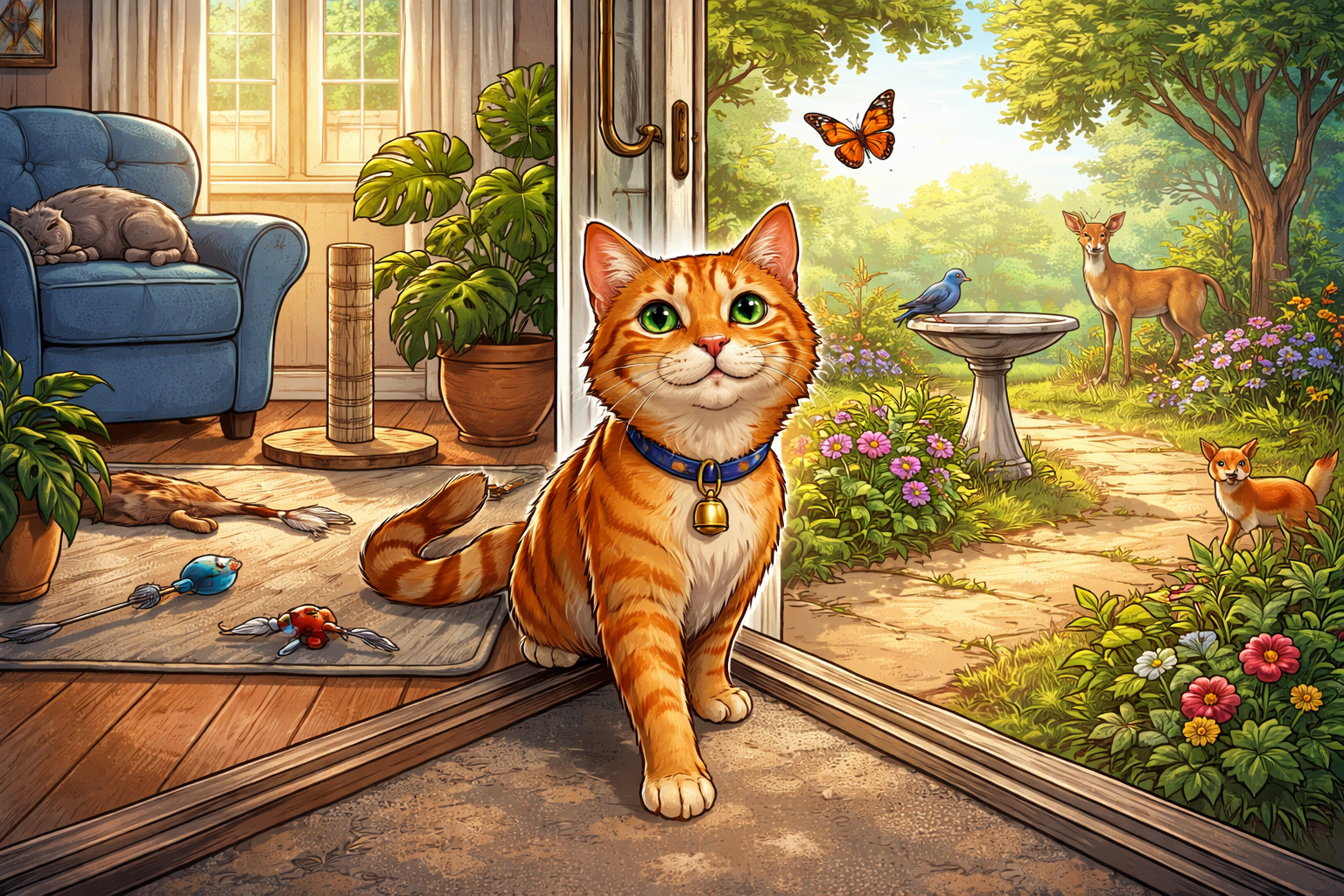
WILLIAMSBURG, Va. — In neighborhoods where suburban calm meets a touch of the wild, a familiar figure slips between worlds: the indoor/outdoor cat. One moment it is curled in a sunbeam, the next it is padding across a fence line, alert to every rustle of leaves and distant call of a hawk. For many cat owners, this dual life offers a compelling balance between safety and stimulation.
The debate over whether cats should live strictly indoors or be allowed outside has persisted for decades. Advocates of indoor-only living point to longer lifespans and reduced risks. Yet others argue that, under the right conditions, an indoor/outdoor lifestyle can provide meaningful physical and psychological benefits that are difficult to replicate within four walls.
Natural Instincts, Fully Engaged
Cats are obligate predators, shaped by evolution to stalk, chase and observe. Even the most pampered house cat retains these instincts. Allowing supervised or limited outdoor access gives them an outlet for behaviors that toys and indoor enrichment can only approximate.
Outside, a cat encounters a constantly shifting environment—new scents, moving targets, changing weather and terrain. This sensory complexity engages the brain in ways that static indoor settings cannot. Experts in animal behavior often point to environmental enrichment as a key factor in reducing stress and preventing behavioral issues such as overgrooming or destructive scratching.
Owners frequently report that cats with outdoor access appear calmer and more content indoors. After exploring, they return home ready to rest, having satisfied their curiosity and instinctual drives.
Physical Health and Exercise
One of the most immediate benefits of outdoor access is increased physical activity. Climbing fences, navigating uneven ground and pursuing small prey all contribute to muscle development, coordination and cardiovascular health.
Indoor cats, by contrast, may struggle with weight gain if their activity levels are not carefully managed. While interactive play can help, it rarely matches the sustained engagement of a natural outdoor environment.
Veterinarians note that a healthy weight is critical for preventing a range of conditions, including diabetes and joint problems. For some cats, especially those with high energy levels, access to the outdoors can serve as an effective complement to indoor care.
Mental Stimulation and Reduced Boredom
A cat confined exclusively indoors relies on its owner to provide stimulation. Without sufficient engagement, boredom can set in, sometimes leading to unwanted behaviors such as knocking over objects, excessive vocalization or aggression.
The outdoor world offers an ever-changing landscape. Birds, insects, shifting light and seasonal changes create a dynamic experience that keeps a cat mentally engaged. This constant novelty can reduce anxiety and promote a sense of fulfillment.
In homes with multiple pets, including dogs, outdoor access can also provide a valuable outlet for cats that prefer occasional solitude. A brief excursion can offer space and autonomy, allowing the cat to return on its own terms.
Strengthening the Human-Animal Bond
Contrary to the assumption that outdoor cats become distant, many owners find that the opposite is true. Cats that are free to explore often choose to return, reinforcing their connection to home and family.
This voluntary return can deepen trust. The cat is not confined but instead participates in a routine that includes both independence and companionship. When it comes back indoors—seeking warmth, food or affection—it is an active choice rather than a necessity.
For families, this dynamic can be especially rewarding. Children and adults alike observe their cat’s rhythms and preferences, gaining insight into its personality in a way that a purely indoor lifestyle may not reveal.
Considerations and Responsible Practices
While the advantages are clear, experts emphasize that an indoor/outdoor lifestyle requires careful management. Risks such as traffic, predators and disease are real, and not every environment is suitable.
In suburban areas with lower traffic and established green spaces, the balance may be more favorable. Preventive measures—such as vaccinations, flea and tick control, and microchipping—are essential. Some owners also establish routines, allowing cats outside only during daylight hours or under supervision.
Alternatives like enclosed outdoor spaces, sometimes called “catios,” can offer a compromise, providing fresh air and stimulation while minimizing risk.
Ultimately, the decision depends on the individual cat, the surrounding environment and the owner’s ability to manage potential hazards.
A Life Between Worlds
The indoor/outdoor cat embodies a unique balance. It is both companion and explorer, at home on the couch and along the garden path. In the right setting, this lifestyle can support physical health, mental well-being and a deeper connection between cat and owner.
As neighborhoods continue to blend the built environment with pockets of nature, the appeal of this dual existence remains strong. For many cats—and the people who care for them—the ability to move between these worlds is not just a convenience, but a defining feature of a life well lived.
========
Rowan K. Tiller is a freelance writer covering animal behavior, suburban ecology and the evolving relationship between pets and people. They live in coastal Virginia, where backyard wildlife and domestic life frequently intersect. This article was written, in part, utilizing AI tools.








Comments