Aaron Brown: Could a subscription model for health care cure our broken system?
Published in Op Eds

What if, for $100 a month — less than many of us pay for cell service — you could go to the doctor anytime you feel sick?
You get an annual physical that takes as long as you need, where you can ask any medical question without worrying about an extra bill. You and your doctor get to know each other. In fact, your medical relationship stands a good chance of lasting longer than your hips or hair.
Sounds pretty good, right? I’m describing direct primary care, and it’s hardly a new idea.
A century ago, going to the doctor was like getting a haircut or buying milk. Medical care was a one-on-one transaction between patients and doctors. Local physicians became pillars of the community.
Last year, I told the story of Dr. S.G. Knight, the doctor in Randall, Minn., who hitched freight trains to reach his rural patients in the early 20th century. You might have heard of Dr. Archibald “Moonlight” Graham, a failed pro ballplayer turned small town doc made famous by W.P. Kinsella’s novella that became the movie “Field of Dreams.”
These doctors’ legacies stemmed from the special relationships they had with patients. They charged what their patients could afford, sometimes nothing, because they owned their own practice.
In the years since, medicine has become more complicated and expensive. Over time, clinics and hospitals have consolidated. Insurance went from being an employment benefit to a necessity. The federal government stepped in to patch the gaps, which turned out to be endless. Meantime, the states moved in 50 separate directions.
Each change happened for a reason and worked for a time, but today we contemplate a U.S. health care system under tremendous financial strain.
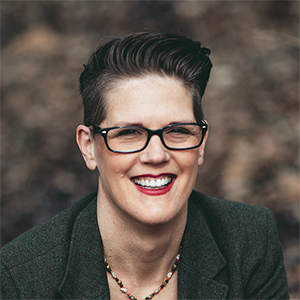
“It’s the insurance model,” said Dr. Nyasha Spears, a Duluth doctor delivering direct primary care. “We’re in this quagmire where we’ve built this model that is unwinnable for patients and physicians.”
When Spears began practicing medicine in 2004, she didn’t imagine direct primary care as an option for a 21st-century physician. She became a family practice doctor for the St. Luke’s system, now part of Aspirus. After she worked in Ashland, Wis., and Duluth, Aspirus closed the clinic where she practiced.
After years of growing pressure to see more patients in less time and bill their insurance more often, she picked up an application for Costco. That’s how burned out she felt by the health care industry.
“There’s real trauma in trying to do a job and not being able to do it,” said Spears. “I liken it to trying to walk through molasses, right? I can still be a doctor but, like, I can’t get there.”
But Spears decided to go a different route. She and her colleague, Dr. Kristin Lusian, formed Amity Creek Primary Care in Duluth. They opened in April and now have more than 200 patients.
But it wasn’t easy. Spears’ contract with Aspirus included a pre-existing noncompete clause, a practice that the Minnesota Legislature banned in 2023. The ban wasn’t retroactive, however. She sued to lift the noncompete, arguing that the company’s decision to close her clinic with 36 days’ notice violated her contract, which required 120 days’ notice.
A judge issued an injunction allowing Spears to open her practice, but Aspirus appealed. The hearing is scheduled Oct. 8, but the process has already cost Spears $300,000 in legal fees. She feels that systems like Aspirus are trying to punish doctors who break out of the existing health care model. Aspirus declined to comment on the pending litigation.
Despite the setbacks, Spears is committed to proving the concept works for many patients.
“We’re serving primarily uninsured and underinsured people,” she said. “Carpenters and artists and waitresses and sandwich makers and entrepreneurs and people that own a welding company and a cleaning company, right? These are people who are the backbone of America who cannot get health care.”
While Spears notes many advantages to direct care for certain patients, she adds that there are serious considerations before you make the leap. You will still need a plan for serious illness or injury. A family doctor can’t treat cancer or perform heart surgery.
The benefits of direct care, however, include a closer relationship with your doctor and ample time to see them when you’re sick or have questions. The subscription model means follow-up visits cost no more than you’re already paying.
The price surprised me. Spears’ practice charges $50 a month for children, $90 for young adults and $100 a month for adults aged 40-64. Adults 65 and older are typically covered by Medicare. These are near the normal prices for direct primary care nationally.
Lab tests carry an additional cost, but some basic tests only cost about $40, she said. Specialist visits and imaging, however, are subject to the rates charged by the hospital or clinics where they take place.
It’s not a perfect solution. But the fact that a 100-year-old model is coming back to life in 2026 tells us that the system we built is breaking.
“I think the real answer is universal health care,” said Spears. “I think that’s the only real answer, but the cavalry isn’t coming on that. I’ve been waiting since the ’90s for that to happen. So, in the interim, this is the best-case scenario that I could see.”
Best case for now, and best case for some. But it will take more than doctors to heal our health care system. It will take leadership and the kind of change only a majority of voters can demand.
_____
©2026 The Minnesota Star Tribune. Visit startribune.com. Distributed by Tribune Content Agency, LLC
































Comments